Florence’s Villa La Quiete: how do you read a villa that became a school?

Villa La Quiete invites a more interesting question than “Which Medici rooms should I see?” How can one place be read through residence, education, religious life and garden care at the same time? The answer begins by allowing those histories to overlap without collapsing them into a single picturesque story. It also begins with a practical caution: the ordinary autumn visiting calendar published for September and October 2026 has ended. A November visit needs a current, confirmed arrangement.
Start with the institution as well as the residence
The University of Florence’s museum account identifies the villa as a summer residence of Anna Maria Luisa de’ Medici and the home, from 1650 for more than three centuries, of the Montalve women’s educational institution. Those are different but connected ways of understanding the building. One focuses on patronage and a named historical figure; the other asks about a community and the organisation of learning over time.
Use both questions when reading the route. A decorated room can express prestige, but an educational space may also prompt you to think about routines, subjects and the people who maintained an institution. Do not invent a particular pupil’s timetable or experience from the appearance of a room. Ask the guide which surviving records support what is being explained. The distinction between a house and the story a museum tells about it is also central to our guide to Casa Buonarroti.
Look for differences between spaces
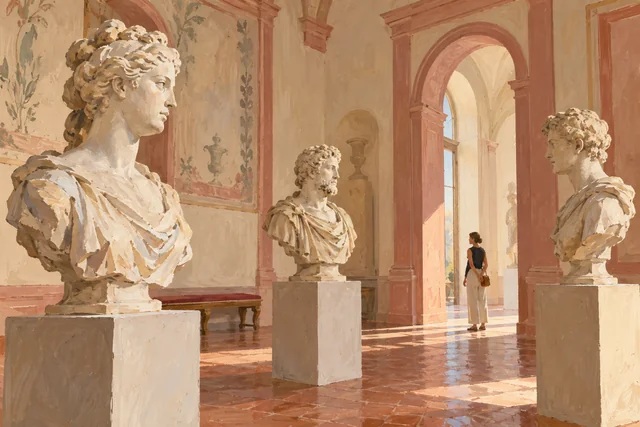
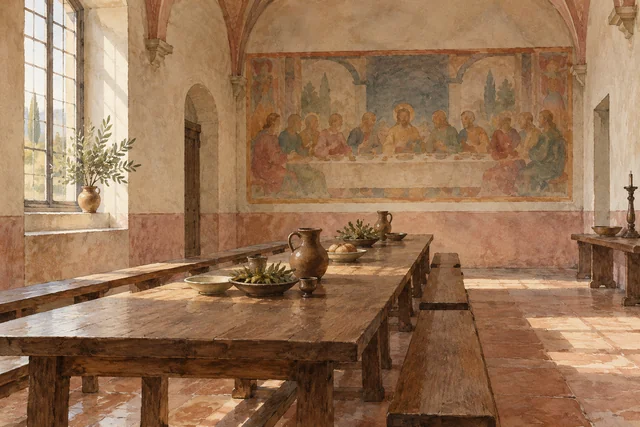
The university’s museum-route description includes the Elettrice Palatina’s frescoed apartment, the church of the Holy Trinity with its lower choir, a seventeenth-century pharmacy and Renaissance artworks. The published autumn itinerary also included a science classroom. Confirm which spaces belong to your booked visit: a thematic garden event and a guided interior tour are not automatically the same route.
Rather than trying to remember every name, choose one comparison. How does the organisation of a room encourage study, ceremony, care or contemplation? Which clues come from the surviving fabric, and which depend on the guide’s explanation? A room may have changed use, so its present arrangement should not be treated as an untouched scene from a single historical moment. Palazzo Davanzati offers a useful parallel question about the relationship between domestic space and museum interpretation.
The garden is a history of work too
A historic garden can look serenely inevitable, as though its paths and planting simply arrived that way. Try reversing that impression. Ask what kinds of planning, tools and continuing maintenance make its order possible. The university’s current programme connects the garden with documents and historic gardening equipment. These provide an opportunity to consider labour and technique alongside patronage, without assuming that a displayed tool was used in every part of the garden or throughout its entire history.
For a separate Medici landscape, La Petraia helps distinguish access to a villa interior from time in its grounds. The same planning discipline matters at La Quiete. A garden’s appearance on a museum website does not make it a permanently open public park. Consult the calendar for the precise date, part of the complex and activity you wish to experience.
What is actually confirmed for November?
As checked on 2 November 2026, the published ordinary guided programme ran from 5 September to 31 October. Its free weekend garden hours were likewise stated for September and October. We do not extend those times into November. The same page says that visits outside the calendar can be arranged with the educational services office on agreed dates; contact the museum for availability and terms rather than arriving on speculation.
A separate university event notice lists a garden-themed meeting at Villa La Quiete on 5 November 2026 at 17:00, with a thematic visit to the garden-history exhibition. Follow its participation information and confirm your place or admission arrangements as applicable. That dated event is not evidence that all rooms, or the garden throughout the day, are generally open.
Match the route to your needs
The university reports step-free museum rooms and garden terrace, but says the lower garden is currently inaccessible to visitors with mobility disabilities. Describe your needs when enquiring and ask about the exact route. A broad statement that a complex is accessible can conceal meaningful differences between its levels. For other cultural plans, our Florence arts and events collection provides separately described options; none should be assumed to include this villa.
On a longer journey, Italy Tour Hub’s university-museum guide offers context for collections managed through academic institutions. La Quiete rewards that broader view. Its interest lies in connecting art, education and the management of a place, while remaining honest about what the records and today’s visitor arrangements allow you to see.
Sources & further reading
Turn a good read into a great day.
Find a highly rated Florentine experience that brings these stories to life.
Explore related experiences →