A Slow Walk Through Oltrarno
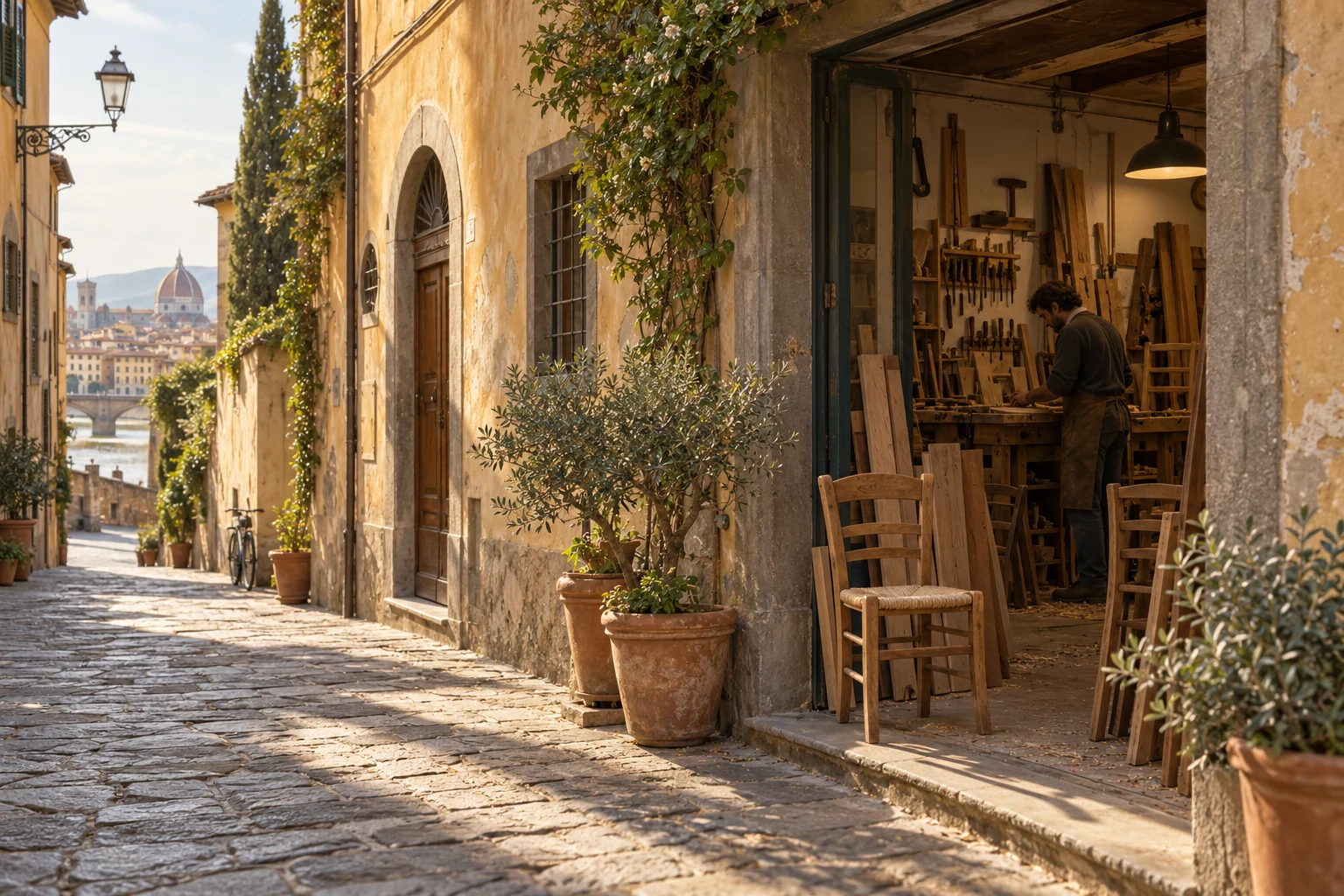
Oltrarno literally points you beyond the Arno, but the phrase is also an invitation to change pace. After the concentrated sightseeing of Florence’s central galleries and cathedral quarter, crossing the river can make room for a different kind of attention. This suggested walk is not a hunt for a hidden “real Florence.” The neighborhood is already part of the real city, including residents, visitors, deliveries and ordinary work. Approach it with curiosity and the courtesy you would want on your own street.
Start with a small route
The municipal tourism itinerary links Ponte Vecchio with Borgo San Jacopo, Piazza della Passera, Via Maggio and Piazza Santo Spirito. Those names give you a useful framework without dictating every turn. Save a map before setting out and choose a comfortable endpoint. You can extend the walk toward Pitti Palace or the Carmine area if time and energy allow, but there is no prize for including every possible stop.
Give the route one theme. You might look for changes in building materials, the proportions of doorways, or the ways small businesses present their work. A theme makes a short walk feel coherent without requiring constant historical commentary. If you prefer a guide, compare the walking-tour collection and check how much of the route is actually in Oltrarno. A tour labeled “Florence highlights” may spend most of its time elsewhere.
Notice work without interrupting it
Oltrarno is associated with artisan workshops, and the municipal guide highlights that tradition. An open door, however, is not automatically an invitation to enter or photograph someone at work. Look for a clear public shop entrance, ask before taking close photographs, and accept a polite refusal without negotiation. If you want an explanation or demonstration, book an experience that explicitly offers one rather than expecting a working craftsperson to become an unpaid guide.
When something interests you, ask about materials and process. How is a surface finished? Which part is made here? How long does a particular stage take? These are more useful questions than asking whether an object is “authentic” in the abstract. If you intend to buy, understand the price, shipping arrangements and any restrictions relevant to taking the item home. A well-chosen small purchase can carry a richer memory than a hurried bag of souvenirs.
Give Santo Spirito time to settle
Piazza Santo Spirito is a good place to stop moving and watch the space work. The church’s restrained facade creates a different atmosphere from the elaborate marble fronts elsewhere in Florence. The square has developed over centuries around religious, residential and commercial life. Rather than immediately deciding whether it is busy or quiet enough for your imagined visit, notice how tables, walking routes, trees and entrances organize the activity in front of you.
If you plan to enter the church or a nearby museum, check its own visitor arrangements. Religious spaces may have separate worship and visiting times, and associated areas may require admission even where the main church has different access. Leave room for a change of plan. The square can still be a satisfying stop when an interior is unavailable, particularly if you have avoided making a single doorway the entire purpose of the walk.
Let food be part of the neighborhood
Choose a meal or a smaller pause according to your appetite, not an online challenge to eat every local specialty. Read the menu, ask about ingredients when necessary and check whether a food tour includes enough tastings to replace lunch. Our Florence dining experiences include guided options that can give food traditions context. For independent eating, a clear menu and a comfortable pace matter more than theatrical claims that a place has no tourists.
Pay attention to your impact after the meal. Use public bins appropriately, avoid sitting in doorways, and keep conversation considerate in residential streets, especially later in the day. A district’s atmosphere depends partly on how visitors behave within it. Enjoying a place thoughtfully is not a complicated ethical performance; it is mostly a collection of ordinary courtesies applied consistently while you are away from home.
End before wandering becomes fatigue
Finish with an easy route back across the river or toward your accommodation. A short walk that leaves you alert is more valuable than a long one that turns every street into a blur. Make a note of one workshop, square or architectural detail you would like to revisit. Oltrarno rewards return visits because it is not a single object to complete. It is a place where different patterns emerge when you arrive with a different question.
For another perspective, continue with Ponte Vecchio: The Bridge That Became a Street. It connects this visit with a different part of Florence and can help you choose what to give your time to next.
Sources & further reading
Turn a good read into a great day.
Find a highly rated Florentine experience that brings these stories to life.
Explore related experiences →