Florence’s Villa il Ventaglio park: how do you plan a hillside garden break?

Florence’s Villa il Ventaglio park offers a change of pace from rooms full of paintings and streets full of appointments. It is a hillside garden, however, not simply a flat green shortcut between attractions. A satisfying visit begins with realistic expectations about terrain, opening times and what the public park actually includes. Think of it as a walk with a few pauses, rather than an extra palace to fit into the day.
Give the slope a place in the plan
Before leaving, locate the entrance on Via Aldini and consider how you will get there and back. A hillside destination can feel quite different at the end of an already long walking day. Allow for the return journey as well as the time inside, and choose footwear suited to outdoor paths. If gradient, seating or surface conditions are important to you, ask the operator about your needs before committing to a route.
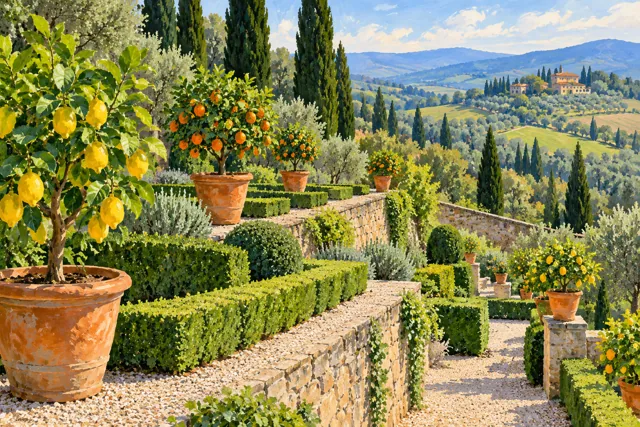
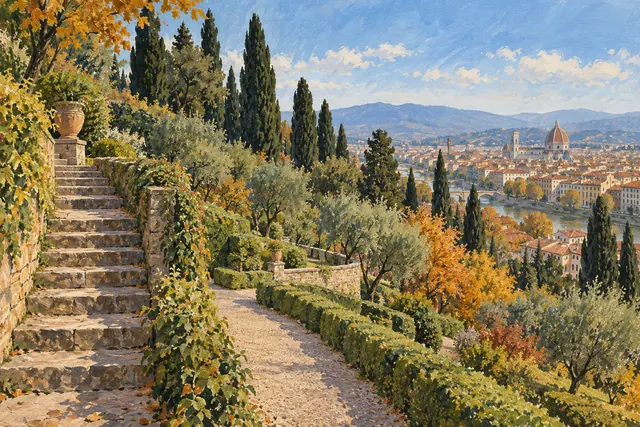
Once inside, begin with a short stretch rather than deciding that you must cover the whole park. Notice how the path turns and how trees frame or conceal the next part of the landscape. A garden can reward a repeated view: walking back along the same section may reveal a different relationship between light, trunks and open ground. There is no requirement to turn every outdoor visit into a circuit.
Read a designed landscape gently
The Ministry of Culture describes a park of about five hectares associated with Giuseppe Poggi’s landscape design. It also records the state’s acquisition in 1967 and later restoration of the hillside. These details provide context, but they are not a reason to assign every plant or path edge to the same historical moment. Living gardens change through growth, maintenance and repair.
Choose one relationship to follow: a path beside a bank, a tree against open sky, or a bench placed near a change of view. Ask what the arrangement encourages you to do. Slow down, turn, look up, or rest? These are observations about your own visit. They need not become unsupported claims about exactly what a nineteenth-century designer intended at each point.
The park and the villa are different promises
The public visitor information used for this guide concerns the park. Do not interpret the word “villa” in its name as a guarantee that the house can be toured on the same occasion. Buildings within historic grounds may have their own uses and access arrangements. Follow signs and marked routes rather than trying a doorway because it looks interesting.
This distinction also helps with ticket and time expectations. You can enjoy an outdoor visit on its own terms without feeling that an inaccessible room has made it incomplete. If a particular building, event or guided activity interests you, seek a current announcement from the responsible institution and check whether it requires a separate booking. A general map label is not an admission offer.
Late October already means an earlier gate
As checked on 28 October 2026, the published schedule gives an 08:15 opening and a 17:30 closing from the last Sunday in October. That change has already taken effect this year. November through February closes at 17:00. The park is normally closed on the third, fourth and fifth Mondays of the month; check current notices for exceptions and weather-related restrictions.
Those times are a planning boundary, not a target for arriving at the gate. Leave enough daylight for the walk you want and start back before closing. A late-afternoon museum habit does not always transfer neatly to a garden. If your day runs behind, shorten the visit or move it to another day instead of treating the final minutes as permission to rush through the grounds.
Pack for the rules of this particular garden
The current official listing excludes pets, ball games, bicycles, skates and eating meals in the park. Do not assume that rules from another Florence garden apply here. Arrange a meal elsewhere and choose an activity that fits a quiet walking visit. Follow any further signs on site, especially around work areas or paths temporarily taken out of use.
With children, a small observation game can be more suitable than equipment: find three different leaf shapes without picking them, or compare the sound under two tree canopies. For adults, a few handwritten notes can create an equally useful pause. The aim is to pay attention without disturbing planting, other visitors or the maintenance work that keeps the garden usable.
Our Bardini Garden guide, botanical-garden article and Boboli guide suggest distinct outdoor experiences. Browse Florence walking experiences by route and pace. Rome’s Villa Ada guide offers another approach to planning green space. At Ventaglio, a manageable route and the correct seasonal gate time are the foundations of a relaxed visit.
Sources & further reading
Turn a good read into a great day.
Find a highly rated Florentine experience that brings these stories to life.
Explore related experiences →