Ponte Vecchio: The Bridge That Became a Street
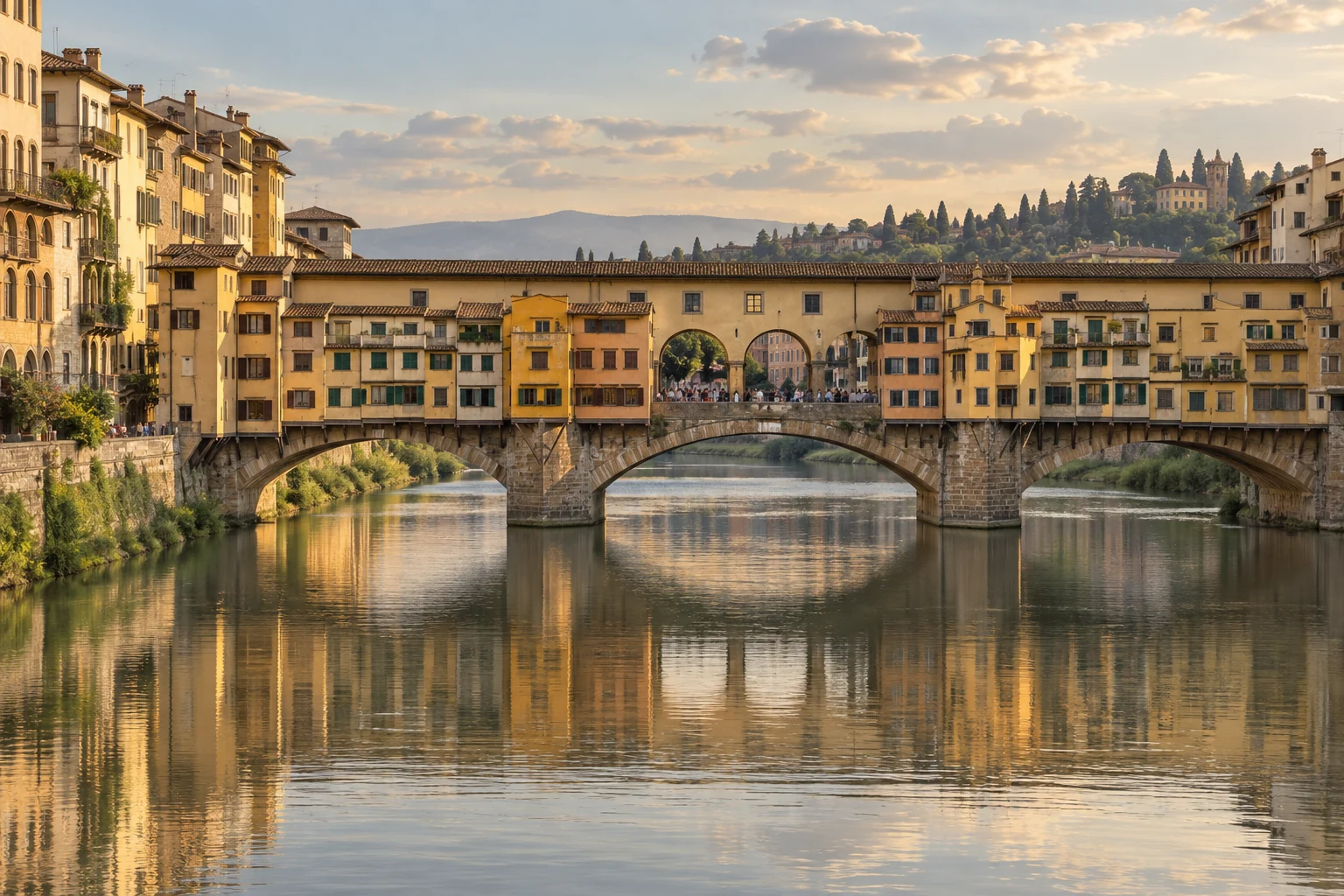
Ponte Vecchio makes an excellent photograph, but its most interesting quality may be how easily it stops feeling like a bridge. Shops line the crossing, the river disappears from view, and for a moment you could be walking along a compact urban street. Then an opening reveals the Arno and the structure becomes a bridge again. That alternation is a good starting point for understanding it. This is infrastructure that also became architecture, commerce and a symbol of the city.
Begin with the river view
Before crossing, find a safe viewpoint along the riverbank where the arches and projecting buildings are visible. The present bridge dates to 1345, following earlier crossings damaged by floods. Its three arches carry a busy built environment above the water. Notice how different the structure looks from a distance compared with the experience of walking through it. A landmark can have one identity in the skyline and another at the scale of a person moving through the city.
The municipal tourism account describes the shift from earlier food trades to goldsmiths’ shops in the late sixteenth century. Rather than treating that as a picturesque footnote, consider what it means for the street. The goods change, the windows change and the social atmosphere changes, while the crossing continues to perform its practical job. A living city is continually edited. Ponte Vecchio is memorable partly because those edits remain visible rather than being erased into a single historical style.
Look upward for the second route
Above the shops runs part of the Vasari Corridor, commissioned by Cosimo I de’ Medici in 1565. The elevated passage linked places of government and residence, including the Uffizi and Pitti Palace. It offers a striking contrast with the public route below: one crossing belonged to everyday city movement, another provided a controlled passage for the ruling court. The bridge therefore carries a story about access as well as architecture.
If the corridor interests you, consult the Uffizi’s current visiting arrangements directly. Walking across the public bridge is not the same as admission to the corridor, and a general Florence tour does not necessarily include it. Avoid building a day around assumed access. Our history experiences offer different ways into the city’s past; read the included sites before choosing. Sometimes an informed explanation from outside is the right fit for your time and budget.
Cross without trying to stop everywhere
Ponte Vecchio is both a destination and a route people need to use. Keep moving through the narrowest stretches, step aside before consulting a map, and choose a safe place for a photograph. The small acts matter: a group spreading across the full width can turn a pleasant crossing into an obstacle for everyone behind it. If the bridge feels crowded, return at another point in your day rather than insisting that the moment must match a quiet promotional image.
Pause where you can see the water and compare upstream with downstream. Light, weather and the river’s surface change the atmosphere more than a list of camera settings will. You do not need the same photograph as everyone else. A reflection, the underside of an arch viewed from the bank, or the contrast between stone and shop fronts may tell your own story more clearly than a perfectly centered postcard composition.
Let the far bank become the next chapter
Crossing toward Oltrarno gives the walk a natural continuation. Instead of turning around immediately, choose a modest route toward a square or café and notice how the streets change. Our Oltrarno walk focuses on the neighborhood beyond the river. Keep workshop visits respectful and remember that a beautiful doorway may still be someone’s ordinary entrance. The pleasure is in observing a working district, not treating every scene as a set.
If your journey also includes Venice, Venice’s walking experiences offer a useful comparison in how water shapes daily movement. The cities are very different, so resist transferring practical assumptions about routes, bridges or accessibility between them. What does transfer is the habit of looking at how people use a place now, alongside asking how it was built.
Remember more than the silhouette
Before you leave the river, choose one detail to keep: the corridor above the shops, the weight of the buildings over an arch, or the instant when the water reappeared between storefronts. That detail makes the landmark personal without needing an invented secret or a dramatic legend. Ponte Vecchio has enough complexity in plain sight. The reward comes from slowing down enough to notice it.
For another perspective, continue with How to Look at Renaissance Art Without an Art History Degree. It connects this visit with a different part of Florence and can help you choose what to give your time to next.
Sources & further reading
Turn a good read into a great day.
Find a highly rated Florentine experience that brings these stories to life.
Explore related experiences →