Florence’s Gipsoteca at Porta Romana: how can plaster casts teach you to look?

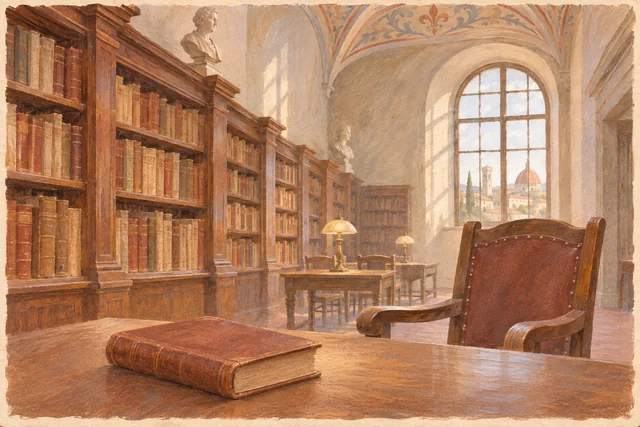
A plaster cast offers a productive pause in a city where visitors are often encouraged to hunt for originals. At Florence’s Gipsoteca associated with the Liceo Artistico di Porta Romana, the useful question is what a cast makes possible for learning. Reproduction can bring forms into comparison, support drawing and direct attention to volume. Before planning the visit, however, remember that a collection within an educational institution does not operate automatically like an all-day walk-in museum.
Arrange access before making it an itinerary anchor
FeelFlorence, the city’s official tourism service, lists the Gipsoteca at Piazzale di Porta Romana 9 and specifies visits by reservation. Its description associates the collection with sculptural models spanning works from the fourteenth to twentieth centuries. Those dates describe the scope presented by the collection; they should not be assumed to date the manufacture of every plaster cast you see.
Contact the institution to confirm your date, entrance, visiting format and any cost. Ask how much time is allowed and whether the route suits your party’s mobility needs. If you hope to draw, clarify whether sketchbooks are permitted and whether any rules apply to materials or seating. A reservation request is not an accepted appointment until the institution confirms it. Keep another nearby activity available if your preferred time cannot be accommodated.
A school setting changes the question
The school’s own May 2026 announcement for a course catalogue presentation placed student and teaching activity in the Gipsoteca. That was a particular event, not evidence of a continuing free-entry programme in November. It does, however, give a concrete reminder that the institution connects collection spaces with artistic education. Approach the visit with curiosity about how forms are studied, as well as which famous sculptures they represent.
Try asking your guide how a cast can help a student compare a silhouette, a pose or the transition between flat and rounded surfaces. Do not assume all the objects were made by students or used in an identical way. Those are collection-history questions. The distinction between the represented sculpture and this particular cast is the most useful starting point.
Use one form for a short looking exercise
Choose a single object that you can view without obstructing anyone. First look at its outline from your permitted position. Then notice where a broad plane turns away from the light and where a small projection casts a shadow. Finally compare your first impression with the object’s label or the explanation you receive. This sequence makes looking active without requiring previous art training.
If sketching is allowed, a few contour lines may be more helpful than attempting a finished drawing. Note which part of the form is difficult to understand from that angle. The point is to discover what looking again changes. Do not move barriers, touch the cast or reposition yourself in a restricted area to improve the exercise. Learning from a teaching collection still requires the care expected in any historic collection.
A copy and an original answer different questions
A cast may reproduce a sculpture’s form while differing in material, surface, weight and context. Those differences are not reasons to dismiss it; they explain what kind of comparison it can support. Ask whether the label identifies its source, maker, date or purpose. The subject represented may be centuries older than the object in front of you, and an old cast can have a history of its own.
Our Orsanmichele guide examines another Florentine relationship between originals and copies. The Baptistery doors article adds a separate case involving material, conservation and display location. Neither example means that every cast in the Gipsoteca has the same purpose as an outdoor replacement. Comparisons are most useful when they preserve differences.
Do not turn every mark into a technical certainty
A seam, a patch or a rough surface can invite questions about manufacture and later treatment. It does not give an untrained visitor enough evidence to diagnose a repair or date a cast. Describe what you notice, then ask what the collection record establishes. “A line is visible here” is a sound observation; “this proves a particular casting method” needs more support.
Rome Tour Hub’s Pietro Canonica studio guide offers a related comparison between finished sculpture, models and the setting of artistic work. It is a different collection with different objects and access arrangements. The connection is the habit of asking what role an object played, rather than ranking everything by the same definition of originality.
Leave space for the rest of Florence
Once the appointment is confirmed, build the surrounding day around its actual duration rather than filling every gap. Our Palazzo Davanzati article provides a useful change of scale, from individual form to rooms and domestic display. Check that museum’s own current arrangements separately. The Florence arts and events collection can help you compare other cultural experiences by their stated inclusions.
The Gipsoteca need not become a test of how many masterpieces you recognise. One carefully examined cast can give you a method to use for the rest of the trip: separate the form represented, the physical object before you and the educational or historical purpose that brought it into the room.
Sources & further reading
Turn a good read into a great day.
Find a highly rated Florentine experience that brings these stories to life.
Explore related experiences →