Piazza della Signoria: Florence’s Outdoor History Lesson
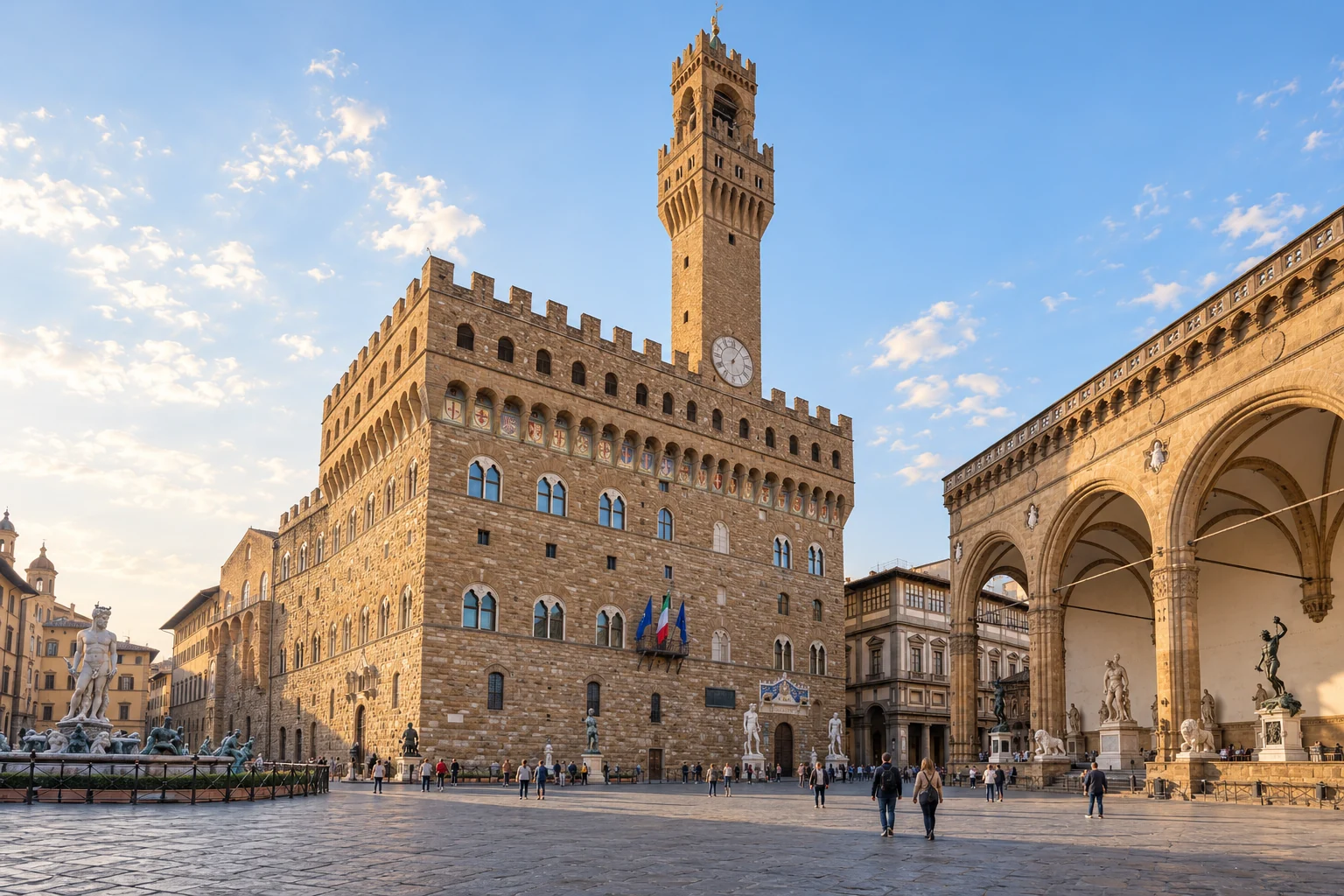
Piazza della Signoria is easy to walk through on the way to somewhere else. The Uffizi is close, the river is nearby, and the tower above Palazzo Vecchio can seem like a convenient landmark for navigation. Yet the square deserves to be a destination in its own right. It brings together government, architecture and public sculpture in a space that has changed across centuries. You can begin to read that relationship without buying a ticket or carrying a specialist guidebook.
Start with the palace and the open space
The square developed alongside Palazzo Vecchio between the thirteenth and fourteenth centuries and became a center of civic life. The palace still has a municipal role as well as museum spaces. Notice how the building’s weight and tower organize the surrounding view. Then turn away from it and consider the square itself: the paths people take, the places where groups gather, and the different edges formed by buildings and the loggia.
This exercise reminds you that public architecture works through space around it. A palace facade viewed in isolation does not tell the whole story. The ability to gather, approach, watch or be seen matters too. You do not need to reconstruct every historical event to appreciate that the square was more than a decorative forecourt. Its scale and arrangement helped make civic authority visible to people moving through the city.
Look at sculpture as a public language
The municipal guide identifies major sculptures around the square and explains that some works displayed outside are copies, with originals preserved elsewhere. The David near the palace is one familiar example. That distinction is useful, but it should not end your interest in the object’s position. A copy can still help you understand how a figure addresses a public space, while the original in a museum offers another kind of encounter.
Choose one sculpture and look at its relationship with a doorway, a wall or the open piazza. Does it face an approaching visitor, invite a view from several sides, or seem to guard a boundary? Keep your interpretation tentative and distinguish observation from historical explanation. A well-informed walking tour can add context, particularly when you want to understand how different works became associated with changing political messages.
Treat the loggia as a change of frame
The Loggia dei Lanzi creates a sheltered architectural setting for sculpture beside the open square. From a respectful distance, compare how an object appears beneath an arch with the way a freestanding monument reads against the sky. Architecture can gather individual works into a shared scene. The transition from open space to covered space is part of what makes the piazza visually rich, even during a brief visit.
Follow current access rules and barriers, and avoid treating steps or monuments as casual picnic furniture. The square may feel informal because it is outdoors, but its objects still require care. Keep photographs and group conversations from obstructing routes. A few considerate decisions make it easier for other visitors to look closely and for people simply passing through to continue their day.
Decide whether to go inside
Palazzo Vecchio offers a different scale of encounter through its museum spaces. The municipal overview describes the Monumental Quarters and works by major Florentine artists, but the exact route available depends on current admissions and notices. A palace visit, a tower visit and an archaeological tour may have different requirements. Read what is included rather than assuming the word “palace” covers every space beneath and above the square.
If you have already committed to a major gallery, the outdoor piazza may be enough for this day. Our one-day Florence guide recommends leaving room between substantial visits. You can return with a more specific interest later. A thoughtful decision to stop outside is more satisfying than rushing through an interior because it happened to be nearby.
Use the square to connect the city
Before leaving, notice the routes toward the Uffizi, the cathedral quarter and the river. The square can help you understand Florence as a connected urban place rather than a set of separate famous attractions. It also offers a useful question for the rest of your trip: how do art and architecture work differently when everyone can encounter them during an ordinary walk? Once you begin asking that, many streets become more interesting, even when they contain no headline monument.
For another perspective, continue with Ponte Vecchio: The Bridge That Became a Street. It connects this visit with a different part of Florence and can help you choose what to give your time to next.
Sources & further reading
Turn a good read into a great day.
Find a highly rated Florentine experience that brings these stories to life.
Explore related experiences →