What Should You Eat in Florence? A Curious First Menu
The most enjoyable first meal in Florence is not necessarily the most famous one. It is the meal that fits your appetite, budget and curiosity at that moment. A city’s food culture becomes easier to approach when you stop treating the menu as a checklist. Choose one unfamiliar dish, ask one useful question and leave room to notice what you are eating. You can learn a surprising amount from a modest lunch when you are not simultaneously planning three museum entrances.
Begin with ingredients and appetite
Florentine menus sit within a broader Tuscan food tradition. Bread, beans, seasonal vegetables, meat and olive oil appear in many forms, but no single restaurant represents the whole region. The municipal tourism guide highlights dishes such as pappa al pomodoro, steak, tripe and lampredotto, alongside regional pasta, stews and sweets. That list is an introduction, not a requirement. If you do not eat a particular ingredient, there is no need to turn trying it into a test of whether you have traveled properly.
Look for a dish that suits the weather and your day. A substantial soup or stew may be more appealing than a large meat course after a long walk; a simpler lunch may suit a later cooking class. Ask what is seasonal without assuming that every menu item changes daily. A short conversation about how a dish is prepared usually teaches you more than a dramatic label such as “the only authentic choice.”
Let bread tell part of the story
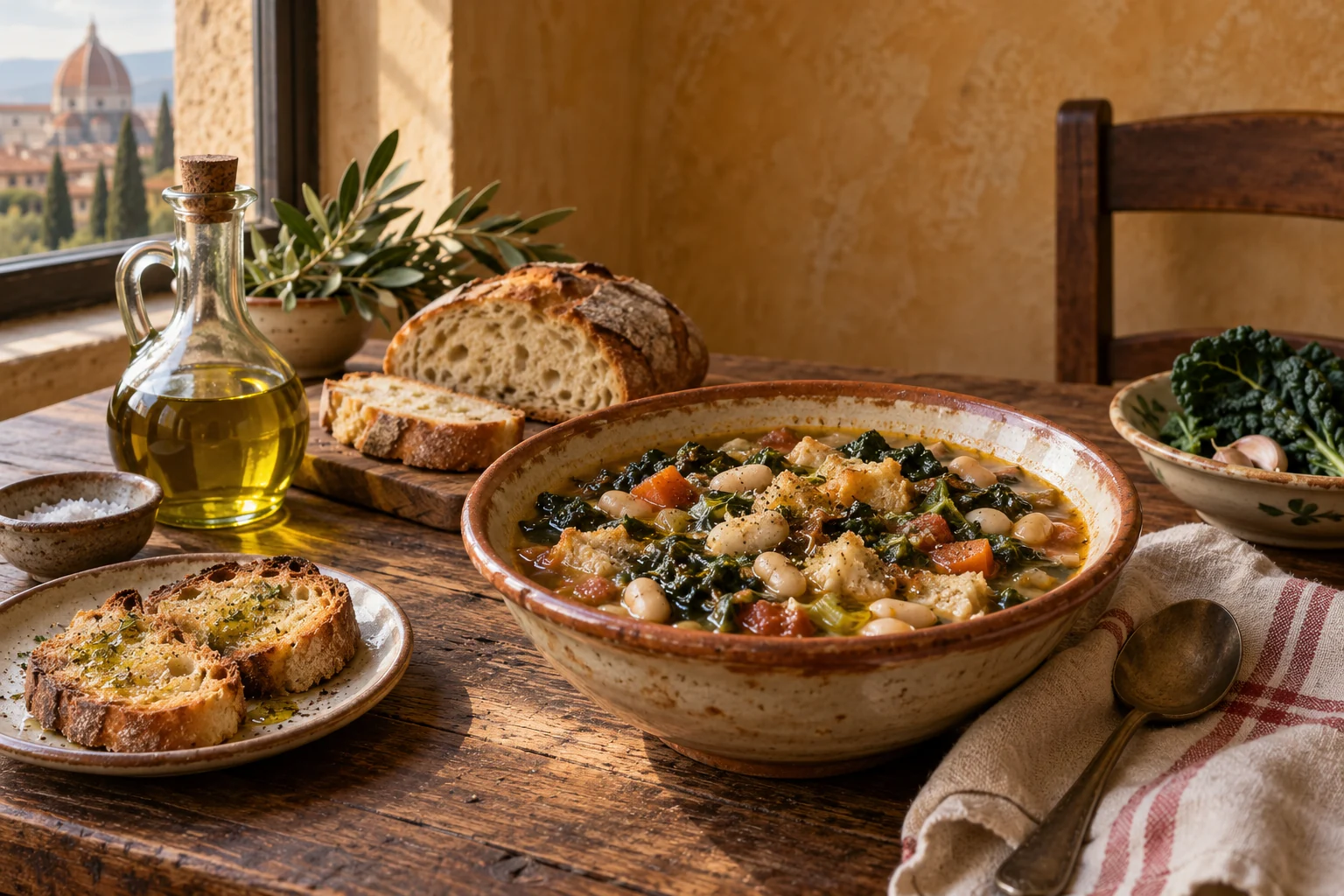
Bread-based dishes are a useful way into a cuisine attentive to making ingredients work hard. Pappa al pomodoro brings bread and tomato together in a comforting form; ribollita is commonly associated with vegetables, beans and bread. Recipes and textures vary between kitchens. Rather than searching for one supposedly definitive bowl, notice what the version in front of you does with consistency, seasoning and olive oil. Ask about the ingredients if the answer matters to your diet.
This is also a chance to reconsider what counts as an impressive restaurant dish. A meal does not need elaborate plating to show care. Texture, temperature and balance can make familiar ingredients memorable. Our Florence dining collection includes food walks and hands-on experiences for travelers who enjoy hearing the context as well as tasting the result. Read the individual itinerary to understand which foods are actually included.
Read meat dishes carefully
If you are considering a large steak, check how it is priced and the portion intended for your table. A price expressed by weight can be misunderstood when compared casually with a fixed-price pasta dish. Ask before ordering rather than trying to interpret the bill afterward. If you are curious about tripe or lampredotto, ask what you are being served and how it is prepared; they are not simply alternative words for an ordinary sliced-meat sandwich.
There is no need to order every course. Explain your appetite, choose thoughtfully and allow the meal to have a comfortable shape. A shared dish may suit one table while individual plates suit another. Dining is easier when you make those choices openly rather than copying the largest order nearby. Check any cover or service charges shown on the menu, and remember that a guided tasting experience follows its own stated inclusions.
Make dietary questions specific
For allergies, coeliac needs or other dietary requirements, contact the restaurant or tour operator before committing. Ask about cross-contact and preparation procedures where relevant, not only whether a named ingredient appears in the dish. The municipal tourism site provides dietary resources, but a general listing cannot confirm the practices of a particular kitchen on your visit. Keep the relevant information written down if language could make a detailed conversation difficult.
Vegetarian travelers should ask about stocks, sauces and garnishes instead of judging by the dish’s name. Cooking-class participants should confirm substitutions before booking, since a class built around a fixed menu may not be able to change every stage. Our guide to choosing a cooking class covers the practical differences between learning to cook, watching a demonstration and joining a tasting-led experience.
Finish with a memory you can describe
At the end of the meal, identify one thing you would like to understand better: a particular bread, the seasoning of a vegetable dish, or why a sauce worked with that pasta shape. Write down the name correctly and ask a respectful question if the staff have time. That small act turns lunch into part of your understanding of Florence. A good food memory is more durable when it includes attention, not simply proof that you ordered something famous.
For another perspective, continue with How Should You Spend One Day in Florence?. It connects this visit with a different part of Florence and can help you choose what to give your time to next.
Sources & further reading
Turn a good read into a great day.
Find a highly rated Florentine experience that brings these stories to life.
Explore related experiences →