Florence’s ribollita: why is yesterday’s bread part of today’s soup?

A bowl of ribollita can look unassuming beside Florence’s grand museum plans. Give it a little attention, though, and it raises an excellent question: what happens when bread becomes an ingredient rather than something served alongside the meal? This Tuscan soup offers a satisfying answer through beans, vegetables and a texture that invites you to slow down. You do not need to identify a restaurant’s secret recipe to enjoy it. Start with what is in your spoon, then ask how the kitchen brought those elements together.
Why does the bread matter?
The regional tourism board’s ribollita recipe describes vegetable-and-bean soup thickened with stale bread and cooked again the following day. The name refers to that second cooking. Its version uses cannellini beans, cavolo nero, Savoy cabbage and other vegetables, with Tuscan bread and olive oil. That gives you a useful starting point for understanding the dish without making one published recipe the rule for every cook.
Look at the bread’s role before deciding whether the bowl is unusually thick. It is meant to become part of the soup. This is a different pleasure from dipping a crisp slice into a clear broth: the bread participates in the texture of each mouthful. Try a small spoonful before adding anything, and notice whether you can still distinguish softened bread, whole beans and greens. A restaurant’s presentation may make those elements more or less visible.
Does Florence have the only version?
No single city needs to own the entire story. Siena’s official tourism account also presents ribollita as a Tuscan dish, emphasizing the reuse of bread and variations across the region. Its recipe layers bread with soup before resting and reheating it. Comparing that approach with the regional recipe is more revealing than insisting that every bowl should be identical. Both make time and bread part of the preparation.
Be cautious with dramatic origin stories. A general association with economical household cooking does not tell us who invented one definitive recipe, or exactly what every family ate centuries ago. You can appreciate resourcefulness without inventing a medieval banquet scene. The evidence on your table is more immediate: a kitchen has turned familiar ingredients into a substantial dish. That is already an interesting culinary idea.
How should you order it?
Check the menu and ask whether ribollita is available that day; a regional specialty is not a promise that every restaurant serves it at every meal. Ask about portion size if you are deciding between a single lunch dish and several courses. A generous bowl may be precisely what you want between visits, while another traveler may prefer to share several different preparations. There is no prize for ordering more than your appetite can enjoy.
Our first Florence menu guide helps place that choice within a wider meal. Use it to make room for curiosity, rather than turning lunch into a checklist. If ribollita is your main interest, say so before joining a food experience: an itinerary described simply as “Tuscan tastings” does not establish that this particular dish is included.
What should you ask about ingredients?
The published regional recipe is based on vegetables, beans, bread and olive oil, but it cannot establish the ingredients or preparation of a restaurant’s bowl. Ask the business directly about stock, garnishes and anything relevant to your dietary requirements. Bread is central to this dish, so do not infer that a vegetable soup is gluten-free. Ask about available alternatives before ordering, and rely on the kitchen’s current information about the food it will actually serve.
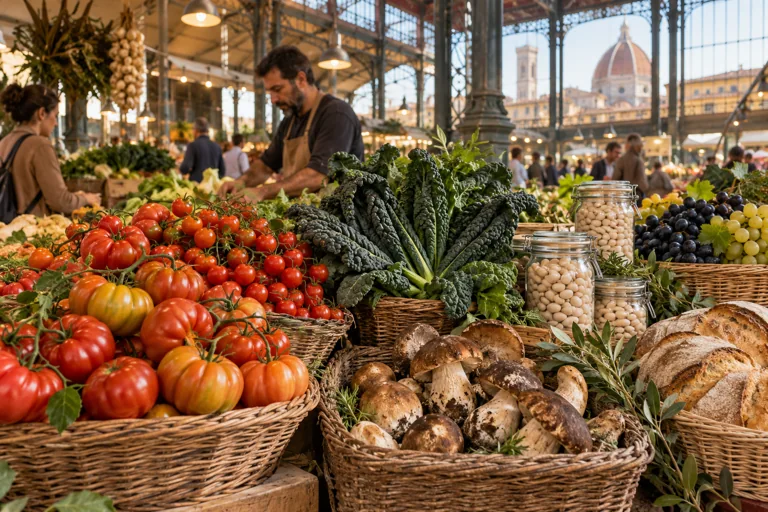
This is also a useful dish for a market conversation. You might look for cavolo nero and compare its long, dark leaves with other cabbages, or ask which bread a cook prefers. Our guide to San Lorenzo and Sant’Ambrogio markets can help you choose a setting. Buy only what you can store and use; an ingredient lesson need not end with a heavy bag carried through the rest of your sightseeing day.
Would a cooking class add something?
A class could help you understand preparation and texture, but only if its actual menu includes the dish. Check that point before booking. Many classes focus on pasta or other specialties, and a market stop does not by itself promise soup-making. Our Florence cooking-class guide explains the other practical comparisons, including participation and dietary arrangements. Browse the Florence dining experiences with a specific question about what you want to learn.
If your journey continues south, Rome’s dining collection provides a useful next stage in exploring regional differences. Let the next city introduce its own food instead of treating one Tuscan bowl as a template for all Italy. For now, give this lunch its own small interval: taste, ask a question if the staff have time, and notice what yesterday’s bread contributes to today’s meal.
Sources & further reading
Turn a good read into a great day.
Find a highly rated Florentine experience that brings these stories to life.
Explore related experiences →