Florence’s Food Markets: San Lorenzo or Sant’Ambrogio?
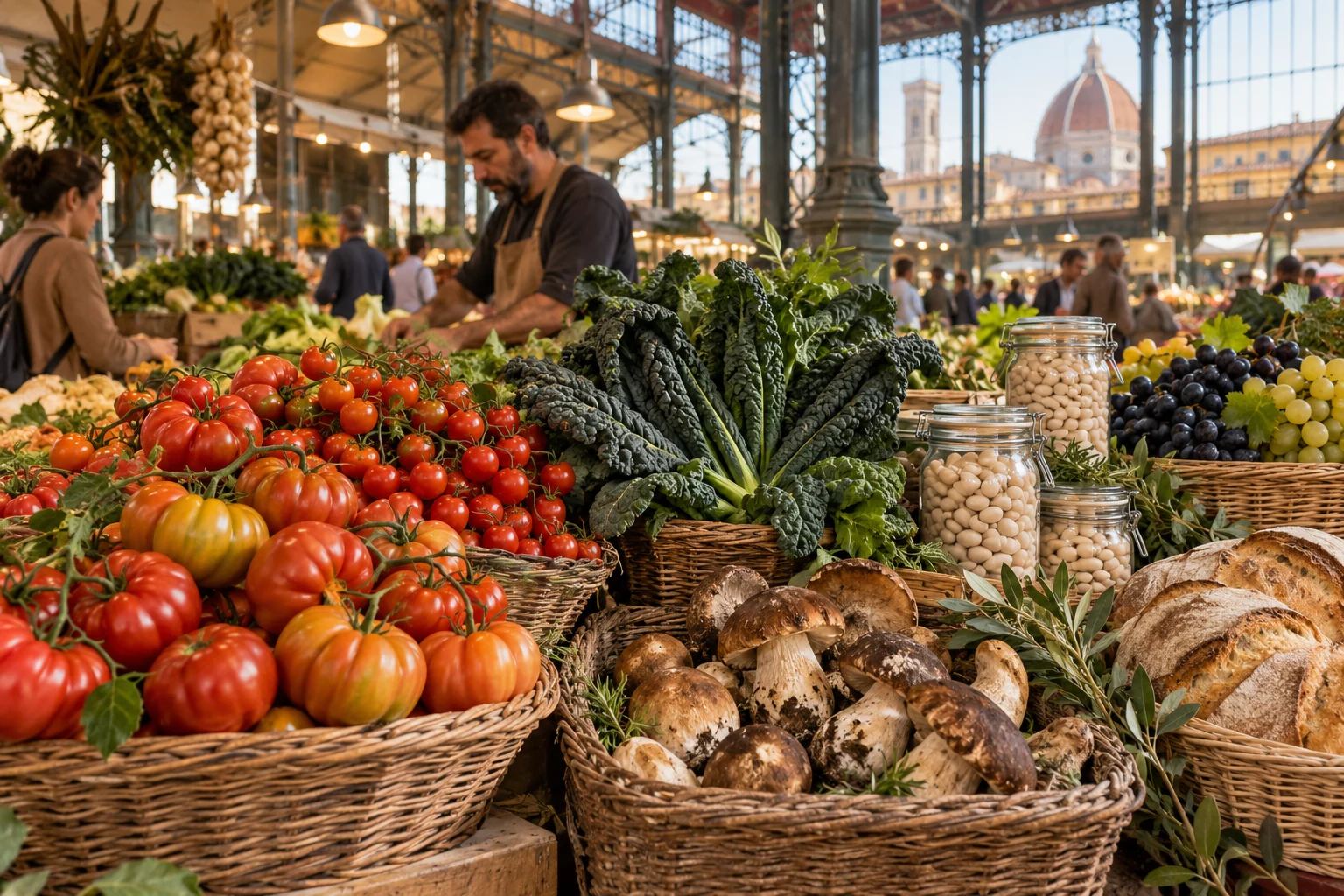
A market visit can be a meal, a shopping errand, an architectural stop or simply a way to see what catches your appetite. Florence offers more than one version of that experience. San Lorenzo and Sant’Ambrogio are both historic food-market districts, but choosing between them is more useful than declaring a winner. Start with where you will already be, how much time you have and whether you want ingredients, prepared food or a guided introduction to local tastes.
Understand what San Lorenzo means
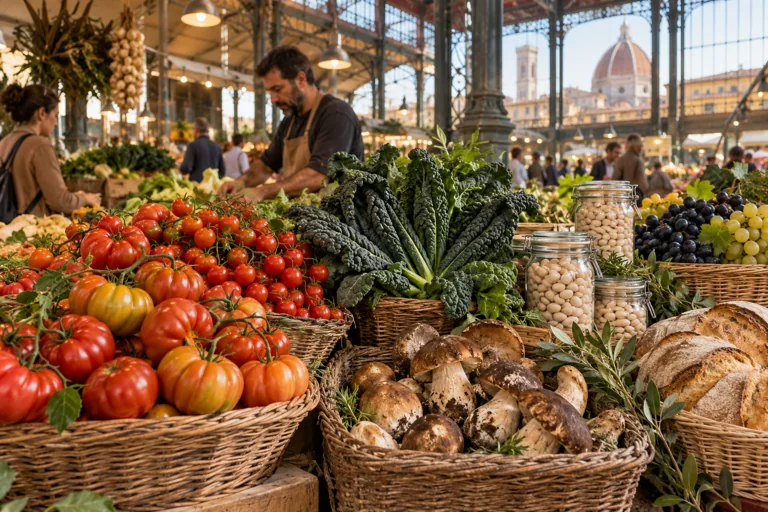
The name can refer to several nearby experiences. The covered market building contains food businesses, while outdoor stalls in the surrounding streets sell other goods, including clothing and souvenirs. Inside, the ground-floor food market and the upper-floor dining area have different characters and operating arrangements. Check the current hours for the part you intend to visit; arriving for one level does not guarantee that every business in the building is open.
The building itself deserves a look. The municipality describes an iron-and-glass nineteenth-century structure designed by Giuseppe Mengoni and inaugurated in 1874. Notice the light, the spans and the way the interior accommodates rows of businesses. Markets are designed environments as well as lively ones. Their architecture makes it possible for many small transactions to happen together, with food, movement and conversation sharing a relatively compact space.
Approach Sant’Ambrogio as a neighborhood visit
Sant’Ambrogio offers another historic covered market in a lively district east of the main central sightseeing axis. The official tourism account places its inauguration in 1873, within the same broad period of urban change as San Lorenzo. You do not need to turn that history into a lecture while choosing lunch. Simply remember that these are established civic places, connected to how Florence reorganized food shopping and public space, rather than inventions created only for modern visitors.
A useful plan is to combine the market with a modest neighborhood walk, leaving time to see what is actually open and appealing that day. Avoid promising yourself a specific stall from an old article. Businesses and hours can change, and a market is most enjoyable when you can respond to what is in front of you. Our dining collection offers reviewed food walks if you would rather have an operator organize the sequence.
Shop with a question, not a performance
Choose one ingredient to learn about. It might be a loaf, a seasonal vegetable, a cheese or a prepared dish you have not tried. Ask a short, specific question when the seller is available, and be ready to buy if you have requested substantial attention. Do not handle produce unless the stall’s practice makes that appropriate. A market has its own working rhythm, and following it usually produces a warmer interaction than staging an elaborate photograph first.
If you have allergies or dietary requirements, communicate them clearly before ordering and ask about preparation as well as ingredients. A familiar-looking dish can contain stock, dairy, gluten or other components that are not obvious. The presence of vegetables does not establish that something is vegetarian, and a traditional recipe does not establish what a particular stall serves today. Written information from the business is more reliable than assumptions based on a general travel article.
Decide whether you want a market tour
A good guided food experience should make its inclusions understandable: number and type of tastings, amount of walking, meeting point, group size and dietary limits. Check whether the market itself is a substantial part of the route or only a brief stop. A cooking class with a market visit is another format again; the shopping may introduce ingredients before a longer session elsewhere. Our cooking-class guide explains what to compare before booking.
For travelers continuing to Rome, Rome’s dining experiences provide a useful next chapter in regional food differences. Let each city explain itself through its own ingredients and habits rather than searching for one universal Italian menu. Florence’s food culture is more interesting when you notice what changes from place to place, and what familiar techniques appear in different forms.
Leave space in the bag and the day
If you buy food to take away, consider storage, the weather and your later plans. A market purchase should not become a burden during a museum visit with bag restrictions. Choose what you can carry and use sensibly, and check transport or customs requirements before taking products across borders. Most of all, leave enough unscheduled time to enjoy the visit. A market is a poor place to rush through while watching the clock.
For another perspective, continue with What Should You Eat in Florence? A Curious First Menu. It connects this visit with a different part of Florence and can help you choose what to give your time to next.
Sources & further reading
Turn a good read into a great day.
Find a highly rated Florentine experience that brings these stories to life.
Explore related experiences →