How should you approach the Museo di San Marco’s painted cells?

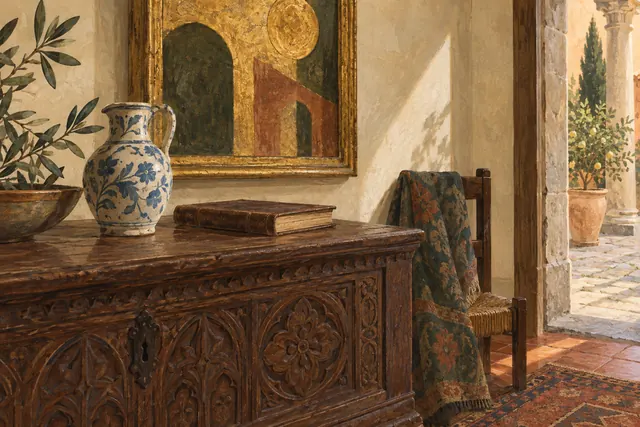
At Florence’s Museo di San Marco, begin by noticing the room around the painting. A fresco in a small cell asks for a different kind of attention from a large picture in a gallery. Its scale, position and relationship to the doorway are part of the experience. You can appreciate that relationship without knowing every figure’s identity or arriving with a detailed history of the Dominican order.
A good first visit moves between close looking and a sense of the whole convent. Choose a few painted spaces, compare them carefully, and leave room for the library or a shared room if the current route allows. The aim is to understand how art belonged to a place, rather than to collect a photograph of every famous image.
A museum within a former convent
The museum’s official presentation explains that the monumental convent was rebuilt by Michelozzo for Cosimo de’ Medici in the fifteenth century and preserves works by Fra Angelico, including frescoes associated with the cells. The collection includes other artists and later material too. Keep that variety in mind instead of treating every object you encounter as part of one moment or one painter’s work.
Our guide to Medici collecting and patronage offers a broader context for asking who paid for art and what they hoped it would achieve. At San Marco, add another question: who was expected to see a particular painting, and in what setting? A public-facing image and one encountered in a small living space could have very different audiences.
Look before reaching for the caption
Start with simple observations. Where does the scene sit on the wall? How much unpainted surface surrounds it? Does the composition draw your eye inward, upward or toward a figure near the edge? Spend a short moment describing those things to yourself before reading the label. Then let the identification and interpretation refine what you noticed.
Our Renaissance art looking guide follows the same principle: observation is a useful starting point, not a substitute for evidence. Avoid assigning emotions or personal intentions to the artist as if they were documented facts. “This arrangement feels quiet to me” is an honest response; “the painter wanted every viewer to feel exactly this” needs support.
Compare two cells rather than rushing through ten
Choose two accessible rooms on the current visitor route and compare one feature: the amount of space around the figures, the use of architecture within the image, or the relationship between painting and window light. The exercise becomes more interesting when the works differ. You are learning how a setting can change your attention, even when the subject belongs to a familiar religious narrative.
Keep thresholds clear and follow the museum’s directions. A small room can feel crowded with very few people, and another visitor may need a different position to see comfortably. If you are visiting with children, invite them to describe a color or shape rather than asking them to decode the whole scene. A focused question gives everyone permission to look at their own level.
Notice the spaces of shared life
Florence’s municipal museum guide highlights the cloister, chapter house, refectories and Michelozzo’s library as well as the painted cells. Moving between these different spaces helps you compare individual and collective settings. Check the actual route on your visit, since the fact that a room appears in a general description does not guarantee unrestricted access to it every day.
There is no need to make every stop equally long. One room may hold your attention because of its proportions, another because of a painting. Before leaving a space, take a final look from a different permitted position. Sometimes the change in scale tells you more than another minute spent reading on a phone.
Build the day around confirmed opening arrangements
Consult the official museum page before committing to your schedule, including last entry, closure days and any special notices. Do not assume that a museum follows the same opening pattern as a nearby church. If access equipment or a step-free route is important, confirm the arrangements with the museum rather than relying on a general accessibility symbol.
The Accademia first-visit guide can help you decide whether a second major art stop would complement your interests or overload the day. Compare the Florence experience collection for the exact museums and guiding included. If your trip continues to Rome, the guide to Raphael’s rooms offers another way to think about paintings made for particular interiors.
Sources & further reading
Turn a good read into a great day.
Find a highly rated Florentine experience that brings these stories to life.
Explore related experiences →