A first visit to the Bargello through three materials
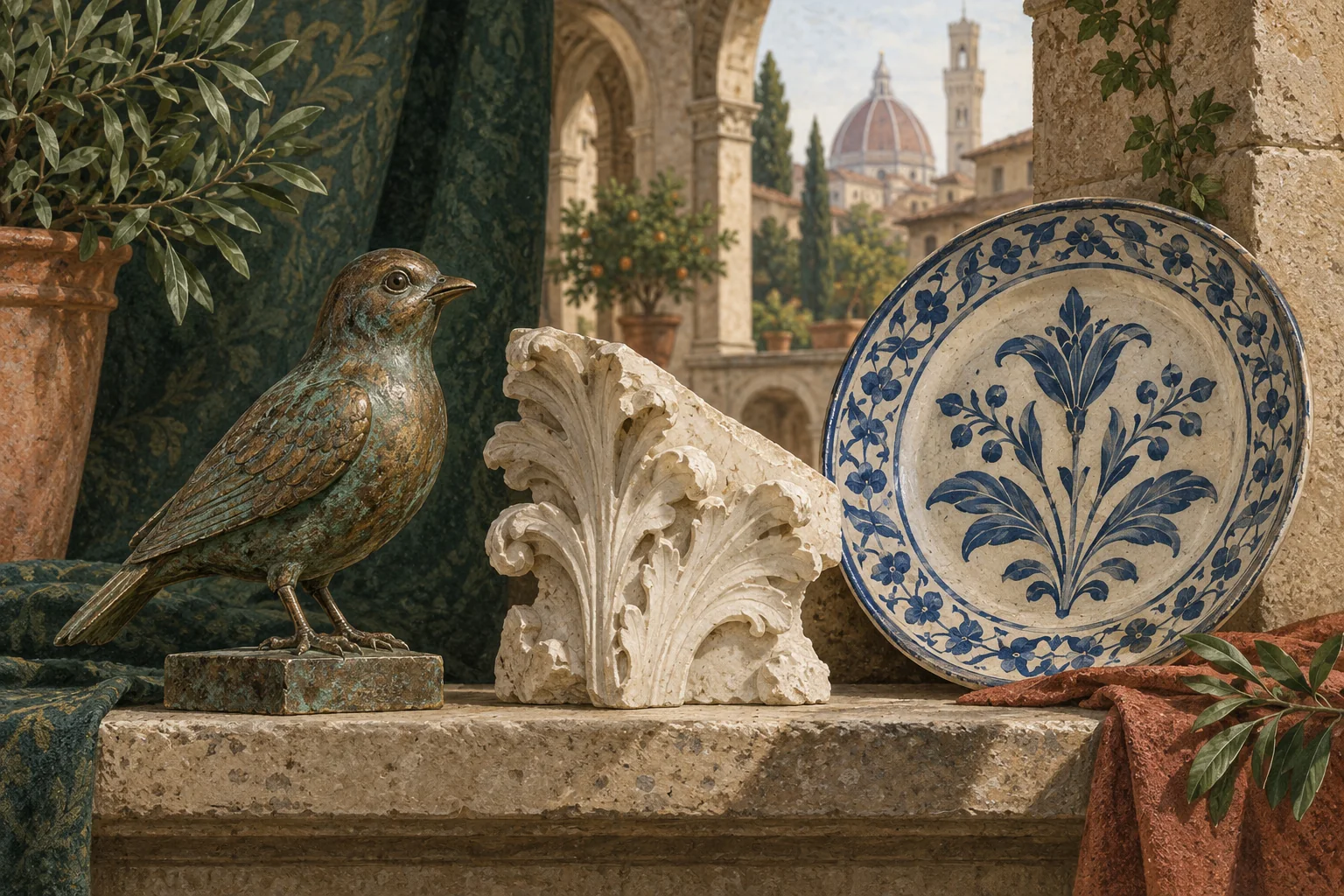
The Bargello is an excellent place to give your eyes a more varied afternoon. Bronze, marble and glazed ceramics ask you to notice different things: the outline of a form, the way light crosses a surface, the relationship between an object’s shape and its decoration. Following those materials gives a first visit a manageable structure. It also leaves room for discoveries that never appear on a list of Florence’s most photographed works.
The museum’s official introduction places Renaissance sculpture alongside a much broader collection of decorative arts. Do not try to complete every category. Choose these three material families as a set of questions and see what is available in the galleries during your visit. Loans, conservation and display changes mean that a particular work’s presence should never be assumed from an old photograph.
Let the building set the pace
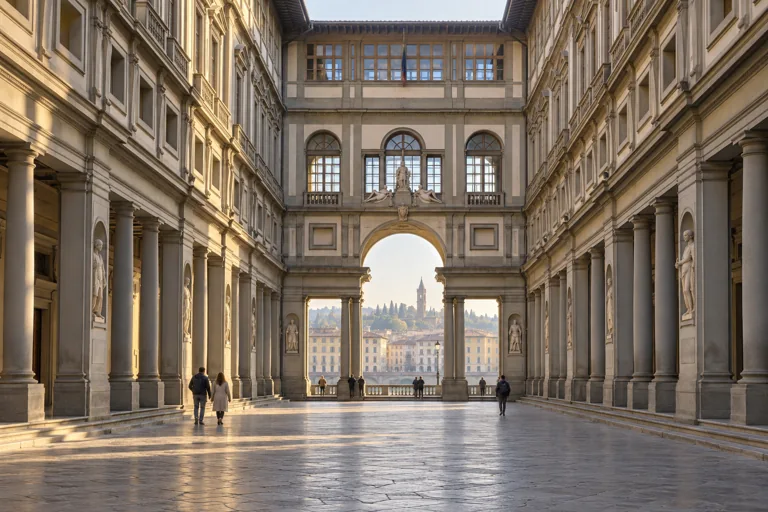
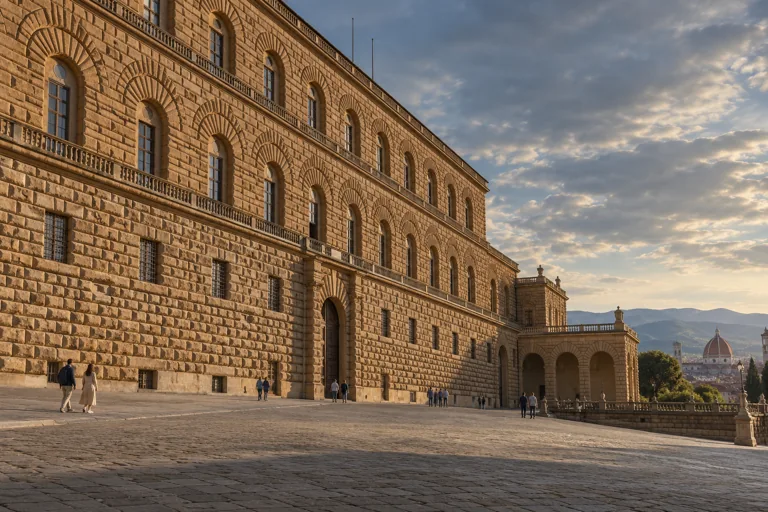
Before concentrating on individual objects, take a moment to understand the palace around you. The official museum history traces the building to the thirteenth century and records its changing civic and judicial uses before it became a national museum in 1865. That makes the setting part of the experience, rather than a neutral box built around the collection.
Notice the difference between an open courtyard and an enclosed gallery: the sound, the direction of light and the distance from which you first see an object. Avoid turning the architecture into a second exhaustive itinerary. One pause is enough to reset your attention. If you have already spent the morning with paintings, this change of medium and setting can be more rewarding than trying to squeeze in another large painting collection.
Bronze: begin with the outline
When you find a bronze work, look at its silhouette before reading the smaller details. Where does the form narrow, extend or balance? Does it seem to invite a view from more than one side? Move only where the visitor route permits, and notice how a small shift in position changes the relationship between limbs, wings or other projecting forms. The space around a sculpture can be as informative as the surface itself.
Then examine the treatment of detail without assuming that every change in color has the same cause. The label may explain technique, condition or later intervention. The Bargello’s family activity material, for example, includes bronze birds associated with Giambologna and Ammannati. It is a useful reminder that small forms can reward serious looking just as much as monumental figures. You need not restrict your attention to the largest object in a room.
Marble: follow light into the carving
For marble, begin with a transition: cheek to neck, fold to shadow, or carved leaf to background. Notice where the surface appears smooth and where it changes more sharply. Look from a respectful distance at how the artist made a hard material suggest something soft, flexible or alive. This is a question about the effect you can see, not an invitation to touch the stone.
A useful comparison is your own response to a freestanding figure and a relief. Does the relief seem shallow from one angle but surprisingly spacious from another? Where does the background stop being merely background? Our thoughtful introduction to David at the Accademia offers another sculpture-focused approach, while Piazza della Signoria adds the question of how sculpture behaves in public space.
Glazed ceramics: connect pattern with shape
The museum’s collection overview includes maiolica among its varied materials and techniques. With a glazed ceramic object, resist reading the decoration as if it were simply a flat picture. Follow it around the rim, across a curved body or toward a handle. Ask whether the shape helps organise the pattern and how the object might have been viewed or handled in its earlier setting.
Read the label before deciding that a beautiful vessel must have been used in an everyday meal. Appearance alone cannot settle its purpose. Compare a repeated motif with a central scene, or a restrained surface with a crowded one. If you are visiting with children, each person can choose one detail they would borrow for an imaginary plate design, without copying an entire object or turning the room into a quiz.
Finish with a comparison you can explain
Before leaving, choose one material that surprised you. Was it the apparent movement of bronze, the softness suggested by marble, or the way a ceramic pattern changed around a curve? Our guide to looking at Renaissance art helps turn those observations into a conversation. You have learned something useful if you can explain your preference in ordinary language.
Check current official opening and ticket information, then browse Florence art experiences if a guided visit would help you connect techniques and context. Verify that the Bargello is actually included. On a later Rome stop, Centrale Montemartini’s contrasting setting offers a fresh way to test the same habit: look at both the object and the surroundings that shape your encounter with it.
Sources & further reading
Turn a good read into a great day.
Find a highly rated Florentine experience that brings these stories to life.
Explore related experiences →